
Most nonprofit leaders come to me asking one question: “Jennifer, how do I get more funding?”
After nearly 40 years in this profession, helping thousands of founders and executive directors just like you, I’ve learned something that might shock you: Funding is rarely the real problem.
What most people call a “funding problem” is actually a CAPACITY problem.
Think about it. Funders, whether they are major donors, corporate sponsors, or foundations, are not looking to “save” your organization. They are looking to invest in it. They don’t invest in passion alone. They don’t invest in desperation. They invest in organizations that demonstrate they have the CAPACITY to manage, report, and sustain the impact of every dollar received. This is the core of my signature teaching: CAPACITY Creates Funding™.
Today, we are diving deep into the two pillars that most founders try to build “later,” but are actually the secret goldmines of your organization: Accountability Systems and Infrastructure.
The “Plumbing” of Your Mission
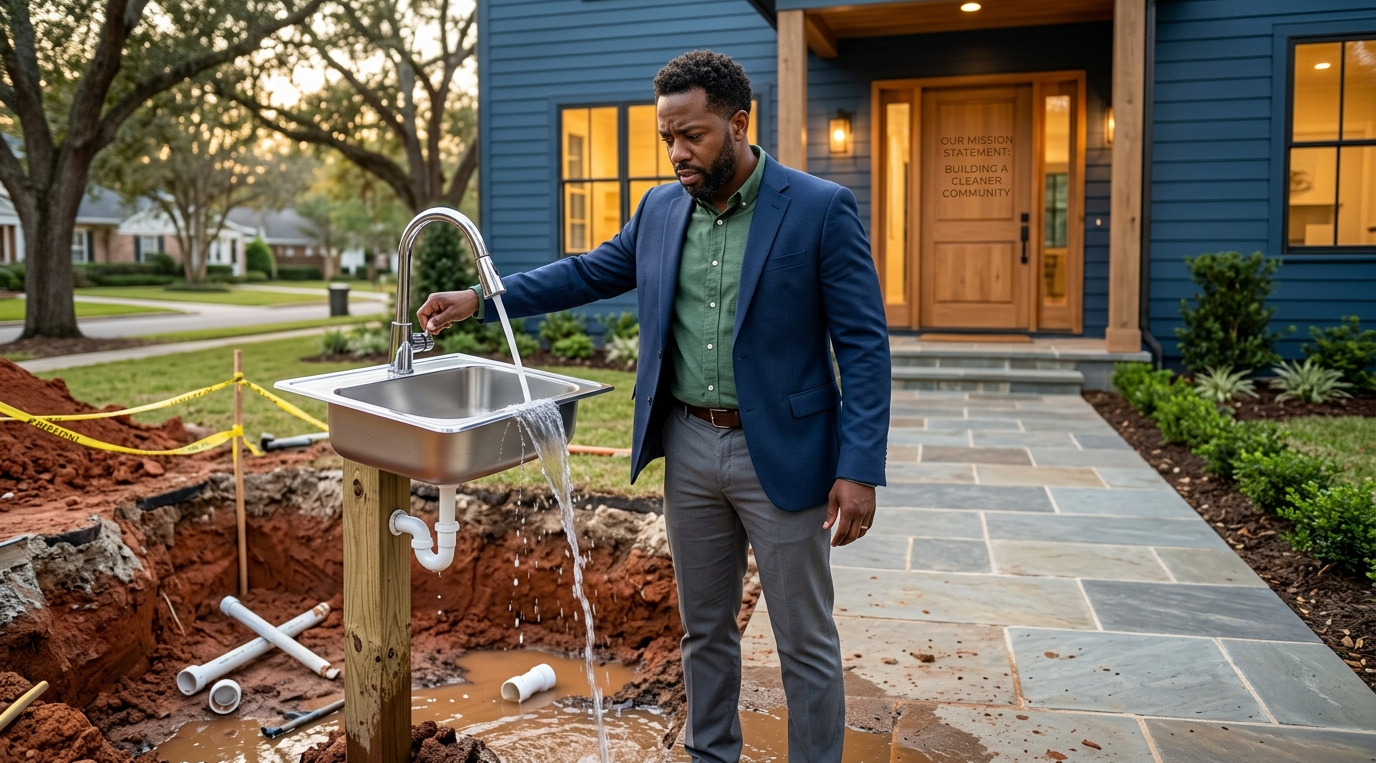
I want you to imagine your nonprofit as a beautiful, high-end home you are building in your community. You have the vision for the layout, the color of the walls (your programs), and the welcoming front door (your mission statement).
But what happens if you forget to install the plumbing?
You can turn on the faucet as hard as you want (ask for grants), but if there are no pipes to carry the water, no filtration to ensure it’s clean, and no drainage to handle the waste, you don’t have a home, you have a disaster.
In the nonprofit world, Infrastructure and Accountability Systems are your plumbing. They are the systems behind the mission that allow funding to flow through your organization and turn into real-world results.
Without them, growth creates chaos. With them, you become a formidable, fundable superhero in your community!
Pillar 1: Accountability Systems (The “A” in CAPACITY)
What does it mean to be accountable? It’s more than just being a “good person.” In the eyes of a funder, accountability means the organization has systems that create transparency and trust.
When a founder tells me, “We’re doing good work,” I believe them. But when a funder asks, “Can you prove it?” you need more than a story. You need a system.
The Components of Accountability
To build a sustainable organization, you must implement:
- Operating Budgets: A clear roadmap for every dollar.
- Financial Reporting: Monthly reports that show where the money went and why.
- Internal Controls: Procedures that ensure no single person has total control over the money (this builds massive trust!).
- Strategic Planning: Showing that you aren’t just reacting to today’s problems, but planning for tomorrow’s solutions.
Accountability Warning Signs
Is your organization built for sustainability? Look for these red flags:
- There is no operating budget for the current year.
- Bank statements are not reviewed by the board regularly.
- The founder is the only person who knows the true financial status.
If these exist, you have an accountability gap. CAPACITY Creates Funding™, and right now, your capacity is leaking! You need these systems to prove to the world that you can be trusted with their “gold.”
Pillar 2: Infrastructure (The “I” in CAPACITY)
If Accountability is the promise of transparency, Infrastructure is the tool that delivers it. Infrastructure represents the systems behind the mission that move you beyond “founder dependency.”
Founders often tell me, “Jen, we’ll build the donor database after we get the big grant.”
That is backwards!
Infrastructure is what allows you to manage the funding once it arrives. If I deposited $250,000 into your account tomorrow, could your current systems handle the reporting, the donor acknowledgment, the volunteer tracking, and the operational surge?
If the answer is “no,” you don’t need a grant writer yet, you need a blueprint.
The Essential Infrastructure Stack
To reach more donors and volunteers, you need:
- CRM / Donor Database: A central engine to track relationships, not just transactions.
- Financial Software: Professional tools (like QuickBooks or specialized nonprofit software) to keep your books “audit-ready.”
- Operational Systems: Documented “Standard Operating Procedures” (SOPs) so everyone knows how the work gets done.
- Volunteer & Staffing Structures: Systems to manage the human “superheroes” helping you solve community problems.
Infrastructure Warning Signs
You might have a capacity issue if:
- You are tracking donors on a messy Excel spreadsheet (or in your head!).
- You don’t have a donor management system to automate “thank you” letters.
- “Growth” feels like “chaos” because you don’t have a process for new staff or volunteers.
The Ultimate Sustainability Test: The “Bus Test”
I use a high-stakes metaphor with my coaching clients called the “Bus Test.”
If you, the founder, were to disappear tomorrow (or, let’s be more positive, if you went on a 30-day tech-free vacation!), would the organization continue moving forward?
- Would the board know how to access the bank accounts?
- Would the donor database keep sending receipts?
- Would the programs continue without your direct supervision?
- Would the reporting systems still produce outcomes for your funders?
If the answer is “no,” you have a CAPACITY problem. You have built a job for yourself, not a sustainable organization. But don’t worry: this is why I am here! We can build those pipes together and make your organization a “formidable” force for good.
How to Start Building Your Capacity Today
Building infrastructure and accountability systems might not feel as “exciting” as your mission, but I promise you, they are the blood of your organization. When you build capacity, you stop chasing money and start attracting it.
1. Conduct an Internal Audit: Look at your “Accountability” and “Infrastructure” warning signs. Which one is your biggest leak?
2. Invest in Tools, Not Just Talent: Before you hire another person, make sure you have the CRM or financial software to support them.
3. Document Your Processes: Start writing down how things are done. This is the first step toward a “formidable” team.
4. Get Expert Guidance: You don’t have to do this alone! I have spent 39+ years learning exactly what funders want to see.
Ready to stop surviving and start thriving?
You have a calling to solve a community problem. You have the passion. Now, it’s time to build the CAPACITY that turns that passion into a fully funded, sustainable reality!
If you are tired of the “grant chase” and want to build a nonprofit that can pass the Bus Test with flying colors, I invite you to join me.
- Join our Skool Mentoring Community: Connect with other founders and get the ongoing coaching, community, and training you need to build your CAPACITY pillars. Click here to join the community!
- Apply for 1:1 Mentoring: Need a tailored, one-on-one “Blueprint” for your organization? Let’s work together to implement the systems that will propel your vision forward. Schedule your session here!
Together, we can build the organization your community deserves. Remember: CAPACITY Creates Funding™. Let’s get to work!